Bringing Computing Closer to Where Things Happen
Imagine taking a photo with your smartphone. Within seconds, it is organized into albums, shared with friends, or backed up online. When you ask a smart speaker to play your favorite song, the music starts almost instantly. A smartwatch tracks your heart rate while you exercise, and a navigation app quickly finds a faster route when traffic builds ahead.
Most people enjoy these experiences without thinking about what happens behind the scenes. For many years, the answer was simple. Devices sent information over the internet to large data centers, often called the cloud. These powerful computers processed the information and then sent the results back to the user’s device.
This system works well for many everyday tasks. However, as technology has become faster and smarter, it has also created new challenges. More people are using connected devices than ever before. Homes have smart televisions, security cameras, voice assistants, and connected appliances. Businesses use sensors, robots, and intelligent machines. Cities rely on smart traffic systems and public safety networks. Every second, these devices generate enormous amounts of data.
Sending every piece of information to a distant data center takes time. Sometimes the delay is very small, perhaps only a fraction of a second. In many situations, that delay does not matter. But in others, even a tiny delay can become a serious problem.
This is where edge computing comes into the picture.
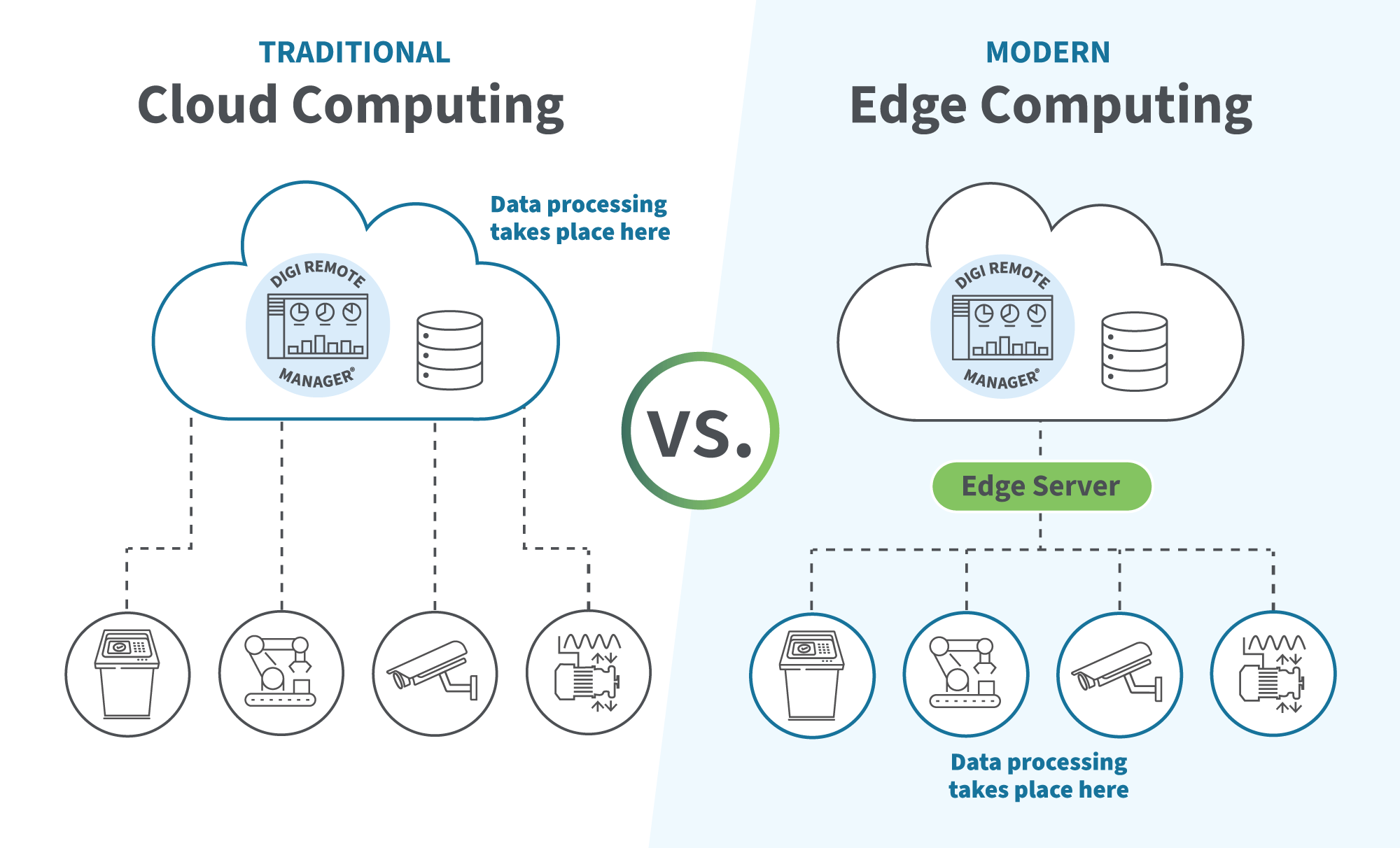
Instead of sending all information to a faraway cloud server, edge computing processes data much closer to where it is created. The “edge” simply refers to the edge of the network, where devices such as smartphones, cameras, sensors, machines, or local computers are located.
Think of it like asking a question. If you have to send your question to someone living in another country and wait for the reply, it naturally takes longer. But if the person standing beside you can answer immediately, everything happens much faster. Edge computing follows the same idea. By handling information nearby, devices can respond more quickly and use less internet bandwidth.
This approach is becoming increasingly important because people now expect technology to react almost instantly. Whether it is a smart factory, a connected car, or a wearable health device, quick decisions can make a big difference.
Rather than replacing cloud computing, edge computing works alongside it. Both technologies have important roles, and together they help create faster, smarter, and more reliable digital experiences.
Why Speed Has Become More Important Than Ever
Modern technology depends heavily on speed. Many tasks that once seemed impossible now happen in real time because computers process information almost immediately. As more devices become connected, maintaining this speed has become one of the biggest challenges in the digital world.
Imagine a self-driving vehicle traveling through a busy city. Cameras and sensors constantly watch the road, identify pedestrians, recognize traffic signals, and monitor nearby vehicles. If the system had to send every image to a distant cloud server before making a decision, even a short delay could become dangerous.
With edge computing, much of this information is processed directly inside the vehicle or at nearby computing systems. The vehicle can react almost instantly without waiting for information to travel across long internet connections.
Healthcare offers another good example. A wearable device that monitors a person’s heart rate can quickly detect unusual patterns. Instead of sending every reading to the cloud before responding, edge computing allows immediate analysis. If something appears unusual, the device can alert the user or healthcare provider much faster.
Factories are also benefiting from this technology. Modern production lines often use hundreds of sensors that monitor machines every second. If a machine begins showing signs of failure, edge computing can identify the problem immediately and notify workers before the equipment breaks down. This reduces costly downtime and improves safety.
Even video streaming services and online gaming rely on faster processing. Players expect smooth gameplay without delays, while viewers want high-quality videos that load quickly. Processing some information closer to users helps reduce waiting times and improves the overall experience.
Smart cities are another growing example. Traffic lights equipped with cameras can monitor vehicle flow and adjust signal timing automatically. Instead of waiting for instructions from distant servers, local systems make quick decisions based on current traffic conditions. This helps reduce congestion and improve road safety.
The importance of speed continues to grow because technology is becoming more interactive. People no longer want devices that simply receive information. They expect devices to understand situations, respond intelligently, and adapt immediately.
Edge computing helps meet these expectations by allowing important decisions to happen exactly where they are needed.
Changing Everyday Life in Ways Many People Never Notice
Many people use edge computing every day without realizing it. The technology works quietly behind the scenes, improving experiences that feel natural and effortless.
Take a smart home, for example. A security camera detects movement near the front door during the night. Instead of sending every second of video to the cloud for analysis, the camera can process much of the information locally. If it recognizes unusual activity, it immediately sends an alert to the homeowner’s phone. This faster response provides greater peace of mind.
Voice assistants also benefit from local processing. Some simple commands can be understood directly on the device without sending every spoken word across the internet. This makes conversations feel more natural while also improving privacy for certain tasks.
Retail stores are beginning to use edge computing in creative ways as well. Smart shelves can detect when products are running low and automatically notify employees. Digital displays may update promotions based on inventory levels or customer activity without depending entirely on distant servers.
Agriculture is another industry experiencing major changes. Farmers use connected sensors to measure soil moisture, temperature, and weather conditions. Edge computing allows irrigation systems to respond quickly when crops need water, helping conserve resources while improving harvests.
Public transportation systems also rely on fast decision-making. Buses, trains, and traffic management systems collect large amounts of information every minute. Processing data closer to where it is collected allows transportation networks to operate more smoothly and respond faster to changing conditions.
Businesses appreciate another important advantage. Since not every piece of information must travel across the internet, network traffic becomes lighter. This reduces costs, improves performance, and allows cloud services to focus on larger tasks that require greater computing power.
Edge computing also supports areas where internet connections may be slow or unreliable. Oil platforms, mining operations, ships at sea, remote research stations, and rural communities cannot always depend on continuous high-speed internet. Local processing allows many systems to continue working even when internet access is limited.
As connected devices continue increasing around the world, edge computing helps ensure that technology remains fast, reliable, and efficient without overwhelming internet networks.
Building a Future Where Devices Think Faster
Technology is moving toward a future where billions of connected devices communicate every day. Smart homes, connected factories, wearable health monitors, autonomous vehicles, intelligent cities, and industrial robots all depend on processing enormous amounts of information.
Cloud computing will remain an essential part of this future because it provides powerful storage, advanced analysis, and large-scale computing resources. However, relying only on distant data centers is no longer enough for every situation.
Edge computing fills this important gap by handling urgent tasks closer to where information is created. This combination creates a balanced system. Quick decisions happen locally, while larger calculations, long-term storage, and detailed analysis continue to take place in the cloud.
Artificial intelligence is making edge computing even more powerful. AI models can now run directly on smartphones, cameras, vehicles, and industrial equipment. Instead of constantly sending information back and forth, devices become capable of recognizing faces, translating languages, identifying objects, or detecting equipment problems almost instantly.
Security remains an important part of this growing technology. Because data is processed in many different locations, businesses must ensure that devices remain protected against cyber threats. Regular software updates, strong authentication, encrypted communication, and careful system management all help maintain security.
Energy efficiency is another advantage. Sending less information across networks reduces unnecessary data transfers, while modern edge devices are becoming increasingly efficient at handling complex tasks using less power. This supports both lower operating costs and more sustainable technology development.
As 5G networks continue expanding around the world, edge computing will become even more effective. Faster mobile networks combined with nearby computing resources will enable new services that require extremely low delays, including advanced healthcare, smart transportation, immersive virtual reality, and industrial automation.
The most interesting part of edge computing is that many people may never notice it directly. They will simply experience faster apps, smarter devices, safer transportation, more responsive healthcare, and better digital services. Behind these improvements, countless small decisions will be happening every second, right where the information is created.
Edge computing is not about replacing existing technology. It is about making technology more intelligent, more responsive, and better suited to the demands of the modern world. As connected devices continue becoming part of everyday life, processing information closer to its source will help create experiences that are faster, more reliable, and more useful for people everywhere. It is a quiet transformation, but one that is helping shape the future of how people live, work, travel, and communicate in an increasingly connected world.